

Camp Clinic Gives Displaced Haitian Mothers a Lifeline as Matching Campaign Begins
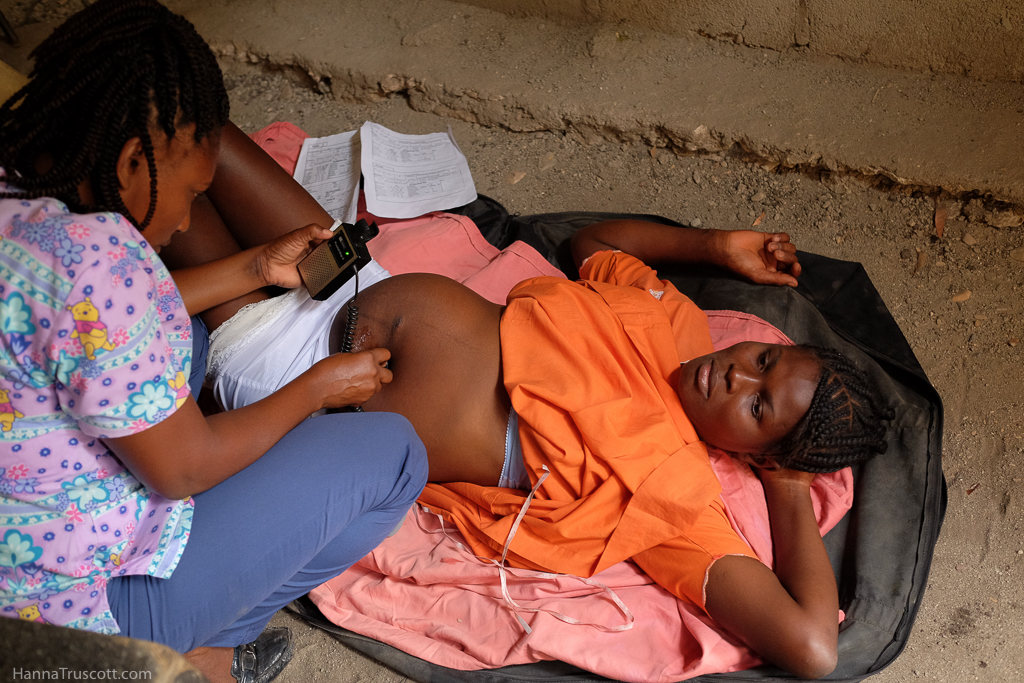
As Together for Haiti Match Day begins, Midwives for Haiti is highlighting Camp Clinic, a weekly program providing maternal healthcare, transportation, and hot meals to women displaced by violence in Haiti's Central Plateau. During the campaign, held July 20–30, qualifying gifts to Midwives for Haiti receive a 50% match, helping extend lifesaving care to even more mothers and babies.
Every Friday morning, Midwives for Haiti's vehicles make their way to camps for families displaced by violence around Hinche. Haitian staff register pregnant women and new mothers, help them aboard, and bring them to Camp Clinic for a day of care. Many have fled gang violence. Many arrive carrying babies. Many have not eaten. By the time they return that afternoon, they have received medical care, health education, two hot meals, and the reassurance that someone knows their name.
More than 1.3 million Haitians are now internally displaced, creating one of the country's largest humanitarian crises in recent history. Families have fled with little more than the clothes they were wearing, leaving behind their homes, livelihoods, schools, healthcare, and support networks. For pregnant women and new mothers, displacement often means losing access to prenatal care, nutritious food, and safe places to give birth.
Camp Clinic was launched after armed groups overran Mirebalais on March 31, 2025, forcing thousands of families to flee into Haiti's Central Plateau. What began as a single Friday clinic quickly grew into a weekly program as more displaced families sought refuge in Hinche. In the first six months of 2026 alone, Camp Clinic recorded 427 visits, with monthly attendance rising from 30 visits in January to more than 120 by late spring.
Women who attend Camp Clinic receive prenatal and postnatal care, family planning, newborn care, cervical cancer screening, health education, referrals for specialized treatment when needed, and two hot meals. For many, it is the most reliable food they will eat all week.
For many women, Camp Clinic is their first encounter with Midwives for Haiti. From there, they enter a continuum of care that can include prenatal services, safe delivery, postpartum follow-up, cervical cancer screening through Li Viv, residential care for high-risk pregnancies through Kay Manman Yo, and, beginning this August, specialized care for vulnerable newborns through Kay Bebe Yo.
The need reflects a broader humanitarian emergency. The latest Integrated Food Security Phase Classification analysis estimates that 5.83 million people, approximately 52 percent of Haiti's population, are experiencing acute food insecurity, the highest level ever recorded in the country. Among displaced families sheltering in schools and public buildings, three out of four face Crisis or Emergency levels of hunger.
In the first half of 2026, across its birth centers and clinics, Midwives for Haiti provided more than 5,000 prenatal visits, attended nearly 300 births, delivered more than 500 postpartum visits, and provided nearly 6,900 patient visits.
Midwives for Haiti is also preparing for additional pressure on Haiti's already fragile healthcare system. Haiti is already struggling to meet the basic needs of more than half its population, and food security experts warn conditions are likely to worsen through the lean season even as humanitarian resources remain stretched. At the same time, more people are expected to arrive. The United States Supreme Court's June 25, 2026 decision cleared the way for the end of Temporary Protected Status for Haitian nationals, a program that has protected an estimated 350,000 people from deportation. Many have lived in the United States for more than a decade and have no homes to return to.
For 20 years, Midwives for Haiti has trained Haitian midwives and provided maternal and newborn care throughout Haiti's Central Plateau. Its entirely Haitian clinical staff delivers care in communities where few other healthcare providers reach. Camp Clinic joins Kay Manman Yo, Kay Bebe Yo, Li Viv, community clinics, and the organization's birth centers as part of an integrated maternal and newborn health system built and led by Haitians.
Together for Haiti Match Day comes at a critical moment. As displacement continues to rise and humanitarian funding becomes increasingly uncertain, every matched donation helps Midwives for Haiti continue providing transportation, healthcare, meals, and safe maternity care for women with few other options.
"These women have lost far more than their homes," said Jane Drichta, Executive Director of Midwives for Haiti. "They've lost access to healthcare, food, income, and community. Camp Clinic exists because no woman should have to choose between displacement and safe maternity care. Every matched gift during Together for Haiti Match Day helps ensure we can continue showing up every Friday for families who have nowhere else to turn."
About Midwives for Haiti
Midwives for Haiti is a nonprofit organization dedicated to increasing access to skilled maternity care in Haiti by educating and supporting Haitian midwives and providing compassionate, culturally congruent care for women and families. Since 2006, the organization has trained hundreds of skilled birth attendants and operates a birth center, high-risk maternity home, community clinics, mobile outreach programs, and Haiti’s first HPV screening and treatment program. By investing in Haitian healthcare professionals and community-based solutions, Midwives for Haiti is helping build a healthier future for mothers, babies, and communities across Haiti.
About Together for Haiti Match Day
Together for Haiti Match Day is an annual, coordinated giving effort uniting ten organizations that serve communities across Haiti, from maternal health, medical care, and child nutrition to clean water, solar energy, agriculture, education, and the protection of vulnerable children. From July 20 through July 30, 2026, gifts made to any participating organization are matched at 50 cents on every dollar, thanks to anonymous donors who have committed more than $50,000 in matching funds. Individual gifts of $50 to $1,000 per organization qualify, and each organization can receive up to $7,000 in matching support. Every gift and its match go directly to the organization it was given to. To give, and to see all ten organizations, visit togetherforhaitimatchday.org.
Jane Drichta
Midwives for Haiti
+1 206-856-2058
info@midwivesforhaiti.org
Visit us on social media:
Instagram
Facebook
Legal Disclaimer:
EIN Presswire provides this news content "as is" without warranty of any kind. We do not accept any responsibility or liability for the accuracy, content, images, videos, licenses, completeness, legality, or reliability of the information contained in this article. If you have any complaints or copyright issues related to this article, kindly contact the author above.
