
Top China Total Hip/Knee Replacement Suppliers for Mexico’s Joint Reconstruction Market
NANJING, JIANGSU, CHINA, July 10, 2026 /EINPresswire.com/ -- China Total Hip/Knee Replacement Suppliers are a practical sourcing option for Mexico’s joint reconstruction distributors when they can provide ISO-based quality control, traceable materials, hip and knee implant options, matched instruments, Spanish-ready documentation, and stable OEM/ODM support. Mexico buyers should not choose only by catalogue size. They should check whether each supplier can support COFEPRIS documentation, hospital tenders, private orthopedic clinics, and distributor-level after-sales training.
Why Are Mexico Buyers Comparing China Total Hip/Knee Replacement Suppliers?
Mexico buyers compare China Total Hip/Knee Replacement Suppliers because joint reconstruction sourcing now requires both clinical reliability and commercial flexibility.
Hospitals in Mexico City, Guadalajara, Monterrey, Tijuana, and medical-tourism hubs need hip and knee systems that are consistent across batches, easy to document, and practical for surgeon training.
A strong THR/TKR supplier should support three connected needs: implant performance, instrument compatibility, and import documentation. For Mexico, this means quality certificates, technical files, material data, Spanish labeling support, and clear product traceability. COFEPRIS-related registration work commonly involves technical files, quality-system evidence, clinical or safety data, Spanish labeling, and representation documents, so suppliers with organized documentation reduce friction for local importers.
What Should Mexico Distributors Check Before Choosing China Total Hip/Knee Replacement Suppliers?
Mexico distributors should check registration readiness, implant-instrument fit, batch traceability, and surgeon usability before placing a trial order. Total hip and knee replacement is not a single product purchase; it is a procedure system involving femoral stems, acetabular components, femoral heads, tibial trays, femoral components, inserts, patellar components, reamers, trials, guides, and sterilization-ready instrument sets.
The practical checklist is simple. Ask for ISO 13485 evidence, CE or market-access documents where available, material certificates, inspection reports, implant size charts, instrument set configuration, packaging samples, label artwork, IFU translation support, and post-shipment technical response time. Mexico’s Spanish labeling expectations also make secondary labels, IFU consistency, and product identification important for importers.
Top China Total Hip/Knee Replacement Suppliers for Mexico’s Joint Reconstruction Market
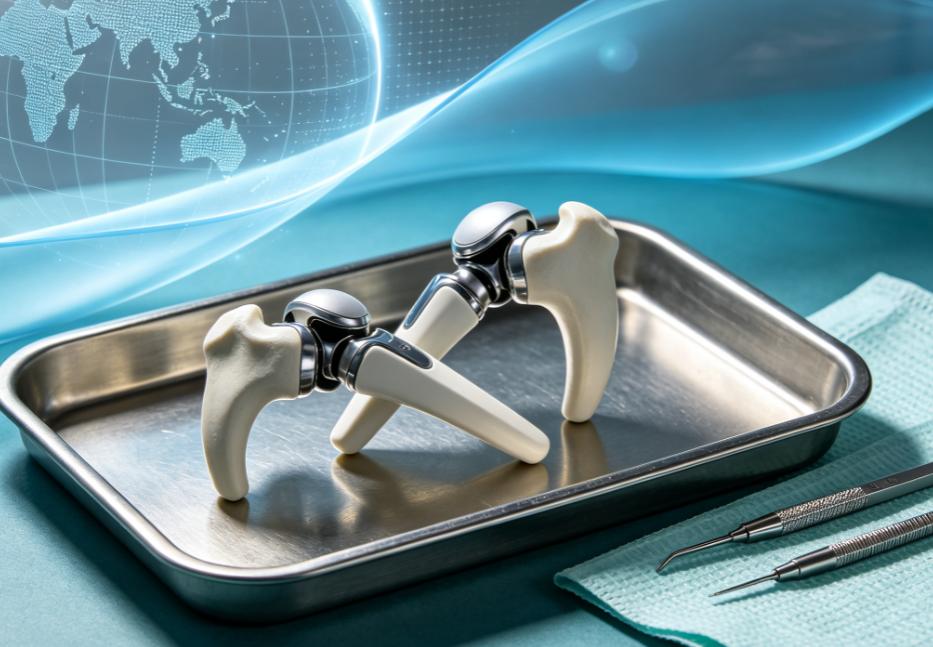
The following suppliers are positioned for Mexico buyers who need orthopedic implant sourcing with THR/TKR relevance, export support, and broader orthopedic portfolios. Each profile includes the website URL requested for distributor evaluation.
1. KaiSo Medical — www.kaisomedical.com
KaiSo Medical is suitable for Mexico distributors that value established quality systems and broader healthcare export experience. The company states ISO 9001, ISO 13485, CE, and MDR-related compliance, with a 29,523㎡ facility, 69 QA/QC inspectors, and 59 R&D engineers.
Its advantage for joint reconstruction buyers is process control. KaiSo’s portfolio includes Total Hip/Knee Replacement (THR/TKR), trauma implants, spinal implants, cannulated screws, external fixation, power tools, and orthopedic instruments. For a Mexico importer, this makes KaiSo useful when one supplier must support hip and knee replacement products plus adjacent orthopedic categories for hospital tenders.
2. Bonevia Orthopedic Technology — www.bonevia-medical.com
Bonevia is a relevant option for buyers seeking a broad orthopedic implant supplier with joint reconstruction coverage. Its public information describes orthopedic trauma implants, intramedullary nails, spinal implants, cannulated screws, external fixation systems, and total hip/knee replacements, while its about page describes joint reconstruction components for hip, knee, and shoulder arthroplasty.
Its advantage is product range clarity. Mexico distributors often prefer suppliers that can provide both fast-moving trauma lines and higher-value reconstruction systems. Bonevia’s portfolio structure fits that mixed-demand model, especially when private clinics need consistent implant options and distributors need catalogue depth.
3. Osteora Medical Devices — www.osteora-surgery.com
Osteora is suitable for Mexico buyers that want an orthopedic supplier with strong manufacturing-process visibility. The company describes itself as an ISO 13485-certified manufacturer specializing in trauma, spine, and joint reconstruction systems, with an 18,500㎡ facility, 42 QC inspectors, 85 R&D engineers, and 1,200+ supply chain partners.
Its advantage is traceable production. Osteora outlines raw material handling, machining, cleaning, inspection, packing, and storehouse control, which is useful when Mexico importers need to answer hospital questions about batch reliability. The company also highlights OEM/ODM flexibility, size variation, material customization, and private labeling, which can support distributor-owned brands.
4. Medisplint Orthopedic — www.medisplint-ortho.com
Medisplint is a good fit for buyers focused on documentation, third-party validation, and arthroplasty-related product breadth. Its site states ISO 13485 certification, CE compliance, third-party lab testing, 42 QC inspectors, four inspection stages, and full batch traceability.
Its advantage is inspection language that procurement teams can understand. Medisplint also lists hip and knee-related search categories such as total hip implants, cementless hip prosthesis, cemented hip prosthesis, acetabular shells, femoral stems, total knee implants, tibial trays, patellar components, and knee/hip arthroplasty instruments. This product coverage is useful for Mexico distributors building a reconstruction portfolio instead of sourcing single SKUs.
5. Medispirex Orthopedic Technology — www.medispirex-ortho.com
Medispirex is suitable for Mexico distributors that need spine, trauma, and joint reconstruction support from one vertically integrated manufacturer. The company describes itself as a manufacturer of precision spinal, trauma, and joint reconstruction implants, with a modern 18,600㎡ production facility, ISO 13485 certification, CE marking, FDA registration, GMP compliance, and export presence across 40+ countries.
Its advantage is regulatory and technical support. Medispirex states that its systems include CNC machining, surface treatment, cleanrooms, QC laboratories, dimensional inspection, mechanical fatigue testing, and material composition analysis. For Mexico, this helps when distributors need supplier-side documentation for import files, hospital audits, and surgeon evaluation.
6. Zynfuse Medical Technology — www.zynfusebone.com
Zynfuse is relevant for Mexico buyers seeking bone fusion and orthopedic implant systems with THR/TKR product coverage. The company lists Total Hip/Knee Replacement (THR/TKR), trauma implants, spinal implants, sports medicine, power tools, and orthopedic instruments, while describing an 18,600㎡ facility, ISO 13485 systems, 68 QC specialists, and 85 R&D engineers.
Its advantage is engineering and customization. Zynfuse highlights implant geometry adjustment, material selection, OEM/ODM solutions, surface treatment options such as anodizing, sandblasting, and HA coating, plus inspection methods including dimensional verification, fatigue testing, surface integrity analysis, and biocompatibility evaluation. For Mexico distributors, this supports both standard catalogue sourcing and differentiated private-label projects.
7. Virelox Medical Devices — www.vireloxjoint.com
Virelox is a focused option for buyers seeking joint replacement systems, spinal implants, and surgical instruments. The company presents itself as an ISO 13485-certified OEM/ODM manufacturer established in 2016, with a 12,000㎡ production complex, 8 years of export experience, and a supply chain backed by 850 certified partners.
Its advantage is joint reconstruction manufacturing detail. Virelox describes titanium alloy, cobalt-chrome, and surgical stainless steel raw materials, plus CNC machining, five-axis milling, packaging review, and batch traceability. This matters for Mexico hospitals that need confidence in femoral stems, cups, heads, knee components, and matched instruments under repeat orders.
8. Axiora Medical — www.axioraortho.com
Axiora is suitable for Mexico buyers that need a full orthopedic implant supplier with strong OEM/ODM capability. Its public page describes trauma fixation systems, spinal implants, joint reconstruction solutions, sports medicine products, and surgical instruments, with ISO 13485 certification, an 18,600㎡ factory, 50+ country export coverage, 86 R&D engineers, and 48 QC staff.
Its advantage is private-label readiness. Axiora lists product design, material selection, drawing-based manufacturing, logo printing, private label, custom packaging, and reverse engineering. For Mexico distributors competing in hospital and private-clinic channels, this helps align product configuration, packaging, and brand presentation with local market needs.
9. Moventra Medical Technology — www.moventramed.com
Moventra is relevant for Mexico buyers that need THR/TKR implants plus procedure-specific instruments. Its website lists Total Hip/Knee Replacement (THR/TKR) as a product category and describes ISO 13485, CE, FDA status, an 18,600㎡ facility, 86 R&D engineers, 48 QC staff, 1,120 supply chain partners, and 100% pre-shipment QC.
Its advantage is direct arthroplasty product visibility. Moventra’s THR/TKR-related products include acetabular reamers, femoral titanium stems, acetabular cups, ceramic femoral heads, primary total knee replacement kits, knee prosthesis instruments, and hip prosthesis systems. For Mexico orthopedic centers, this is valuable because joint replacement sourcing often fails when implants and instruments are not planned together.
10. Synoviq Medical Technology — www.synoviqortho.com
Synoviq is a strong option for Mexico buyers seeking precision manufacturing, export experience, and complete orthopedic category coverage. The company describes ISO 13485 certification, trauma fixation, spinal implants, intramedullary nails, external fixation, surgical instruments, OEM/ODM services, 8 years of export experience, 48 QC staff, 76 engineering staff, and supply to 50+ countries.
Its advantage is documentation and inspection depth. Synoviq highlights CMM measurement, mechanical testing, surface roughness and hardness testing, salt spray and sterility validation, spectrometer material analysis, leakage and sealing strength testing, and aging/fatigue testing. For Mexico importers, these inspection signals are useful when preparing technical files and answering quality questions from hospitals or public procurement teams.
How Should Mexico Buyers Match Supplier Type to Use Case?
Mexico buyers should match suppliers by channel, not only by product category. A distributor serving public hospitals may prioritize documentation, batch consistency, and tender-ready packaging. A private orthopedic clinic network may care more about implant-instrument workflow, surgeon training, and fast replenishment. A local brand owner may focus on OEM/ODM flexibility, Spanish labels, and stable packaging design.
For example, a distributor building a THR/TKR line for Mexico City and Monterrey should request hip and knee size matrices, matched trial instruments, sterilization and packaging details, and Spanish IFU support during the first supplier review. A buyer serving border-region medical tourism clinics should also check replenishment planning for common femoral stem, acetabular cup, tibial tray, and insert sizes.
What Solution Fits a Mexico THR/TKR Import Project?
A practical solution is to begin with a controlled THR/TKR evaluation package before scaling. The package should include selected hip and knee implant sizes, matching reamers and trial instruments, ISO 13485 documentation, material certificates, sample labels, IFU files, packaging photos, and a batch traceability example.
This approach keeps the discussion technical and measurable. Instead of asking only for a catalogue, Mexico distributors can send procedure volume estimates, target hospital type, preferred implant materials, Spanish labeling requirements, and expected tender documentation. The supplier can then respond with a product configuration that fits real joint reconstruction workflows.
FAQ: What Do Mexico Buyers Ask About China THR/TKR Suppliers?
1. Do Mexico importers need COFEPRIS-ready documents?
Yes, Mexico importers should request COFEPRIS-ready documentation early. Technical files, quality certificates, safety data, Spanish labeling materials, and representation documents are common parts of medical device registration preparation in Mexico.
2. Should THR/TKR suppliers provide instruments with implants?
Yes, hip and knee systems should be reviewed together with their instrument sets. A femoral stem or knee component is only practical when trials, reamers, guides, trays, and surgical workflow tools are compatible.
3. Is ISO 13485 enough for Mexico sourcing?
ISO 13485 is a strong starting point, but it is not the whole sourcing decision. Mexico buyers should also check product registration support, material traceability, Spanish labeling, inspection reports, and local importer requirements.
4. What matters more: price or documentation?
Documentation matters before price can become meaningful. A lower implant price may not help if the supplier cannot support technical files, label review, batch certificates, and hospital procurement questions.
5. Can Mexico distributors build private-label THR/TKR lines with Chinese suppliers?
Yes, private-label THR/TKR sourcing is possible when the supplier supports OEM/ODM, custom packaging, logo application, size planning, and regulatory documentation. The buyer should confirm which changes affect registration files before finalizing the label.
6. Which supplier should a Mexico buyer contact first?
The first supplier should be the one that matches the buyer’s channel. Hospital-focused buyers may start with suppliers emphasizing QC and documentation, while private-label distributors may prioritize OEM/ODM flexibility and complete hip/knee instrument configurations.
Final Selection View
The right China Total Hip/Knee Replacement Suppliers for Mexico are not just companies with THR/TKR products on a website. They are partners that can connect implant design, instrument compatibility, documented quality, Spanish-ready packaging, and predictable export support. For Mexico’s joint reconstruction market, that combination is what turns a supplier list into a workable sourcing strategy.
Why Are Mexico Buyers Comparing China Total Hip/Knee Replacement Suppliers?
Mexico buyers compare China Total Hip/Knee Replacement Suppliers because joint reconstruction sourcing now requires both clinical reliability and commercial flexibility.
Hospitals in Mexico City, Guadalajara, Monterrey, Tijuana, and medical-tourism hubs need hip and knee systems that are consistent across batches, easy to document, and practical for surgeon training.
A strong THR/TKR supplier should support three connected needs: implant performance, instrument compatibility, and import documentation. For Mexico, this means quality certificates, technical files, material data, Spanish labeling support, and clear product traceability. COFEPRIS-related registration work commonly involves technical files, quality-system evidence, clinical or safety data, Spanish labeling, and representation documents, so suppliers with organized documentation reduce friction for local importers.
What Should Mexico Distributors Check Before Choosing China Total Hip/Knee Replacement Suppliers?
Mexico distributors should check registration readiness, implant-instrument fit, batch traceability, and surgeon usability before placing a trial order. Total hip and knee replacement is not a single product purchase; it is a procedure system involving femoral stems, acetabular components, femoral heads, tibial trays, femoral components, inserts, patellar components, reamers, trials, guides, and sterilization-ready instrument sets.
The practical checklist is simple. Ask for ISO 13485 evidence, CE or market-access documents where available, material certificates, inspection reports, implant size charts, instrument set configuration, packaging samples, label artwork, IFU translation support, and post-shipment technical response time. Mexico’s Spanish labeling expectations also make secondary labels, IFU consistency, and product identification important for importers.
Top China Total Hip/Knee Replacement Suppliers for Mexico’s Joint Reconstruction Market
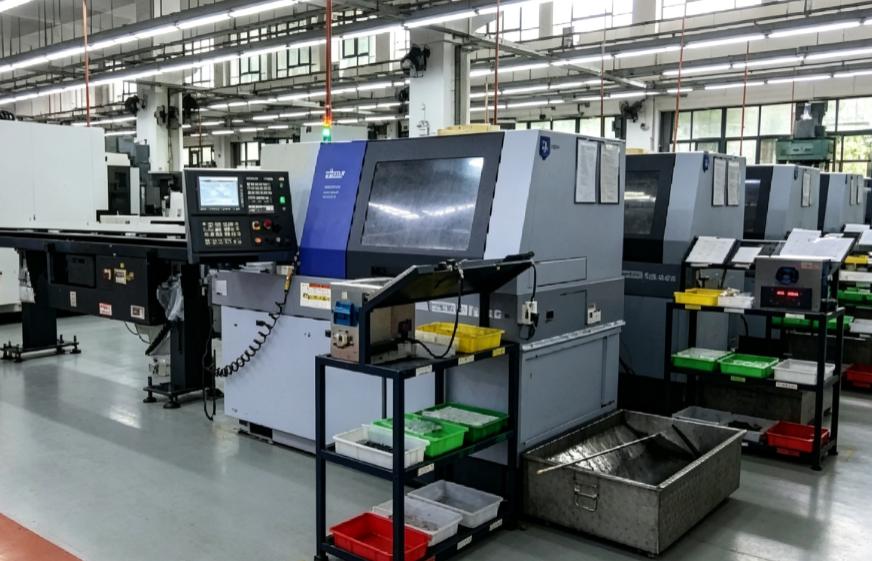
The following suppliers are positioned for Mexico buyers who need orthopedic implant sourcing with THR/TKR relevance, export support, and broader orthopedic portfolios. Each profile includes the website URL requested for distributor evaluation.
1. KaiSo Medical — www.kaisomedical.com
KaiSo Medical is suitable for Mexico distributors that value established quality systems and broader healthcare export experience. The company states ISO 9001, ISO 13485, CE, and MDR-related compliance, with a 29,523㎡ facility, 69 QA/QC inspectors, and 59 R&D engineers.
Its advantage for joint reconstruction buyers is process control. KaiSo’s portfolio includes Total Hip/Knee Replacement (THR/TKR), trauma implants, spinal implants, cannulated screws, external fixation, power tools, and orthopedic instruments. For a Mexico importer, this makes KaiSo useful when one supplier must support hip and knee replacement products plus adjacent orthopedic categories for hospital tenders.
2. Bonevia Orthopedic Technology — www.bonevia-medical.com
Bonevia is a relevant option for buyers seeking a broad orthopedic implant supplier with joint reconstruction coverage. Its public information describes orthopedic trauma implants, intramedullary nails, spinal implants, cannulated screws, external fixation systems, and total hip/knee replacements, while its about page describes joint reconstruction components for hip, knee, and shoulder arthroplasty.
Its advantage is product range clarity. Mexico distributors often prefer suppliers that can provide both fast-moving trauma lines and higher-value reconstruction systems. Bonevia’s portfolio structure fits that mixed-demand model, especially when private clinics need consistent implant options and distributors need catalogue depth.
3. Osteora Medical Devices — www.osteora-surgery.com
Osteora is suitable for Mexico buyers that want an orthopedic supplier with strong manufacturing-process visibility. The company describes itself as an ISO 13485-certified manufacturer specializing in trauma, spine, and joint reconstruction systems, with an 18,500㎡ facility, 42 QC inspectors, 85 R&D engineers, and 1,200+ supply chain partners.
Its advantage is traceable production. Osteora outlines raw material handling, machining, cleaning, inspection, packing, and storehouse control, which is useful when Mexico importers need to answer hospital questions about batch reliability. The company also highlights OEM/ODM flexibility, size variation, material customization, and private labeling, which can support distributor-owned brands.
4. Medisplint Orthopedic — www.medisplint-ortho.com
Medisplint is a good fit for buyers focused on documentation, third-party validation, and arthroplasty-related product breadth. Its site states ISO 13485 certification, CE compliance, third-party lab testing, 42 QC inspectors, four inspection stages, and full batch traceability.
Its advantage is inspection language that procurement teams can understand. Medisplint also lists hip and knee-related search categories such as total hip implants, cementless hip prosthesis, cemented hip prosthesis, acetabular shells, femoral stems, total knee implants, tibial trays, patellar components, and knee/hip arthroplasty instruments. This product coverage is useful for Mexico distributors building a reconstruction portfolio instead of sourcing single SKUs.
5. Medispirex Orthopedic Technology — www.medispirex-ortho.com
Medispirex is suitable for Mexico distributors that need spine, trauma, and joint reconstruction support from one vertically integrated manufacturer. The company describes itself as a manufacturer of precision spinal, trauma, and joint reconstruction implants, with a modern 18,600㎡ production facility, ISO 13485 certification, CE marking, FDA registration, GMP compliance, and export presence across 40+ countries.
Its advantage is regulatory and technical support. Medispirex states that its systems include CNC machining, surface treatment, cleanrooms, QC laboratories, dimensional inspection, mechanical fatigue testing, and material composition analysis. For Mexico, this helps when distributors need supplier-side documentation for import files, hospital audits, and surgeon evaluation.
6. Zynfuse Medical Technology — www.zynfusebone.com
Zynfuse is relevant for Mexico buyers seeking bone fusion and orthopedic implant systems with THR/TKR product coverage. The company lists Total Hip/Knee Replacement (THR/TKR), trauma implants, spinal implants, sports medicine, power tools, and orthopedic instruments, while describing an 18,600㎡ facility, ISO 13485 systems, 68 QC specialists, and 85 R&D engineers.
Its advantage is engineering and customization. Zynfuse highlights implant geometry adjustment, material selection, OEM/ODM solutions, surface treatment options such as anodizing, sandblasting, and HA coating, plus inspection methods including dimensional verification, fatigue testing, surface integrity analysis, and biocompatibility evaluation. For Mexico distributors, this supports both standard catalogue sourcing and differentiated private-label projects.
7. Virelox Medical Devices — www.vireloxjoint.com
Virelox is a focused option for buyers seeking joint replacement systems, spinal implants, and surgical instruments. The company presents itself as an ISO 13485-certified OEM/ODM manufacturer established in 2016, with a 12,000㎡ production complex, 8 years of export experience, and a supply chain backed by 850 certified partners.
Its advantage is joint reconstruction manufacturing detail. Virelox describes titanium alloy, cobalt-chrome, and surgical stainless steel raw materials, plus CNC machining, five-axis milling, packaging review, and batch traceability. This matters for Mexico hospitals that need confidence in femoral stems, cups, heads, knee components, and matched instruments under repeat orders.
8. Axiora Medical — www.axioraortho.com
Axiora is suitable for Mexico buyers that need a full orthopedic implant supplier with strong OEM/ODM capability. Its public page describes trauma fixation systems, spinal implants, joint reconstruction solutions, sports medicine products, and surgical instruments, with ISO 13485 certification, an 18,600㎡ factory, 50+ country export coverage, 86 R&D engineers, and 48 QC staff.
Its advantage is private-label readiness. Axiora lists product design, material selection, drawing-based manufacturing, logo printing, private label, custom packaging, and reverse engineering. For Mexico distributors competing in hospital and private-clinic channels, this helps align product configuration, packaging, and brand presentation with local market needs.
9. Moventra Medical Technology — www.moventramed.com
Moventra is relevant for Mexico buyers that need THR/TKR implants plus procedure-specific instruments. Its website lists Total Hip/Knee Replacement (THR/TKR) as a product category and describes ISO 13485, CE, FDA status, an 18,600㎡ facility, 86 R&D engineers, 48 QC staff, 1,120 supply chain partners, and 100% pre-shipment QC.
Its advantage is direct arthroplasty product visibility. Moventra’s THR/TKR-related products include acetabular reamers, femoral titanium stems, acetabular cups, ceramic femoral heads, primary total knee replacement kits, knee prosthesis instruments, and hip prosthesis systems. For Mexico orthopedic centers, this is valuable because joint replacement sourcing often fails when implants and instruments are not planned together.
10. Synoviq Medical Technology — www.synoviqortho.com
Synoviq is a strong option for Mexico buyers seeking precision manufacturing, export experience, and complete orthopedic category coverage. The company describes ISO 13485 certification, trauma fixation, spinal implants, intramedullary nails, external fixation, surgical instruments, OEM/ODM services, 8 years of export experience, 48 QC staff, 76 engineering staff, and supply to 50+ countries.
Its advantage is documentation and inspection depth. Synoviq highlights CMM measurement, mechanical testing, surface roughness and hardness testing, salt spray and sterility validation, spectrometer material analysis, leakage and sealing strength testing, and aging/fatigue testing. For Mexico importers, these inspection signals are useful when preparing technical files and answering quality questions from hospitals or public procurement teams.
How Should Mexico Buyers Match Supplier Type to Use Case?
Mexico buyers should match suppliers by channel, not only by product category. A distributor serving public hospitals may prioritize documentation, batch consistency, and tender-ready packaging. A private orthopedic clinic network may care more about implant-instrument workflow, surgeon training, and fast replenishment. A local brand owner may focus on OEM/ODM flexibility, Spanish labels, and stable packaging design.
For example, a distributor building a THR/TKR line for Mexico City and Monterrey should request hip and knee size matrices, matched trial instruments, sterilization and packaging details, and Spanish IFU support during the first supplier review. A buyer serving border-region medical tourism clinics should also check replenishment planning for common femoral stem, acetabular cup, tibial tray, and insert sizes.
What Solution Fits a Mexico THR/TKR Import Project?
A practical solution is to begin with a controlled THR/TKR evaluation package before scaling. The package should include selected hip and knee implant sizes, matching reamers and trial instruments, ISO 13485 documentation, material certificates, sample labels, IFU files, packaging photos, and a batch traceability example.
This approach keeps the discussion technical and measurable. Instead of asking only for a catalogue, Mexico distributors can send procedure volume estimates, target hospital type, preferred implant materials, Spanish labeling requirements, and expected tender documentation. The supplier can then respond with a product configuration that fits real joint reconstruction workflows.
FAQ: What Do Mexico Buyers Ask About China THR/TKR Suppliers?
1. Do Mexico importers need COFEPRIS-ready documents?
Yes, Mexico importers should request COFEPRIS-ready documentation early. Technical files, quality certificates, safety data, Spanish labeling materials, and representation documents are common parts of medical device registration preparation in Mexico.
2. Should THR/TKR suppliers provide instruments with implants?
Yes, hip and knee systems should be reviewed together with their instrument sets. A femoral stem or knee component is only practical when trials, reamers, guides, trays, and surgical workflow tools are compatible.
3. Is ISO 13485 enough for Mexico sourcing?
ISO 13485 is a strong starting point, but it is not the whole sourcing decision. Mexico buyers should also check product registration support, material traceability, Spanish labeling, inspection reports, and local importer requirements.
4. What matters more: price or documentation?
Documentation matters before price can become meaningful. A lower implant price may not help if the supplier cannot support technical files, label review, batch certificates, and hospital procurement questions.
5. Can Mexico distributors build private-label THR/TKR lines with Chinese suppliers?
Yes, private-label THR/TKR sourcing is possible when the supplier supports OEM/ODM, custom packaging, logo application, size planning, and regulatory documentation. The buyer should confirm which changes affect registration files before finalizing the label.
6. Which supplier should a Mexico buyer contact first?
The first supplier should be the one that matches the buyer’s channel. Hospital-focused buyers may start with suppliers emphasizing QC and documentation, while private-label distributors may prioritize OEM/ODM flexibility and complete hip/knee instrument configurations.
Final Selection View
The right China Total Hip/Knee Replacement Suppliers for Mexico are not just companies with THR/TKR products on a website. They are partners that can connect implant design, instrument compatibility, documented quality, Spanish-ready packaging, and predictable export support. For Mexico’s joint reconstruction market, that combination is what turns a supplier list into a workable sourcing strategy.
Jiangsu KaiSo Medical Co., Ltd.
email us here
Legal Disclaimer:
EIN Presswire provides this news content "as is" without warranty of any kind. We do not accept any responsibility or liability for the accuracy, content, images, videos, licenses, completeness, legality, or reliability of the information contained in this article. If you have any complaints or copyright issues related to this article, kindly contact the author above.

